Anumati: Proof of Adherence as a Formal Consent Model for Autonomous Agent Protocols
Ravi Kiran Kadaboina
Independent Researcher
M.S., Computer Engineering, University of New Mexico, 2011
Anumati is Sanskrit for “consent” or “formal permission.”
Abstract
Section titled “Abstract”As autonomous AI agents increasingly call other agents to complete tasks on behalf of a human principal, a structural accountability gap has emerged: the calling agent accepts the terms of service of the callee without any protocol-level mechanism to prove that it understood those terms or that it subsequently honoured them. Authentication protocols such as OAuth and mutual TLS establish who may call which capability. They do not address under what conditions a permitted call may be made, and those conditions change as the callee’s policies evolve. In this paper we formalise the distinction between proof of acceptance (a timestamped acknowledgement) and proof of adherence (a per-action reasoning record citing the specific clause evaluated). We propose three primitives (PolicyDocument, ConsentRecord, and AdherenceEvent) that together constitute a versioned, append-only consent model for agent-to-agent communication. The model is instantiated as a non-breaking extension to two widely used agent protocols: the Agent2Agent (A2A) protocol and the Model Context Protocol (MCP). A TLA+ specification of the consent lifecycle, together with a reference Python implementation of the chain integrity and adherence trail validators, is available in the accompanying repository.
1. Introduction
Section titled “1. Introduction”In this section we discuss the motivation leading to our work, an overview of the current state of consent handling in agent protocols, and our approach to closing the accountability gap that we identify. Section 1.1 gives background on how calling agents today commit their principals to the terms of the services they call. Section 1.2 describes the motivation upon which the work was developed, including the empirical evidence that agents are not honouring even basic exclusion signals today, and the regulatory pressure under the EU AI Act. Section 1.3 describes related work in single-agent governance, runtime enforcement, and privacy standards. Section 1.4 describes the specific contributions of this work and our approach.
1.1 Background
Section titled “1.1 Background”The Agent2Agent protocol (A2A) [4] standardises how one agent advertises its capabilities and authenticates another. The Model Context Protocol (MCP) [5] plays an analogous role for communication between an orchestrator agent and the tools or data sources it consumes. Both protocols delegate security to standard HTTP authentication mechanisms such as OAuth 2.x, API keys, OpenID Connect, and mutual TLS. These mechanisms are well designed for the question they answer: given a request, is the requesting agent permitted to invoke the requested capability.
A second category of rules governs something different. Consider an agent
that provides a data analysis service. Authentication tells the calling
agent whether it is permitted to invoke the analyse_dataset skill. It
says nothing about whether the calling agent may store the task output
beyond the current session, whether it may aggregate results across
multiple principals, whether it is obligated to notify its human principal
before invoking skills above a given cost threshold, or whether it may
share results with a third agent the callee has not authorised. These
constraints are contextual, compositional, and they change as the callee’s
policies evolve. They cannot be encoded in OAuth scopes, which are
discrete, static, and binary. Scopes answer “permitted or not.” Usage
policy answers “permitted, under these conditions, as of this version,
subject to change.”
Further complicating the picture, under the Uniform Electronic Transactions Act (UETA) §14, contracts formed by electronic agents bind the human principal, even without their awareness [7, 8]. As callee policies evolve and calling agents continue operating under stale terms, the principal’s legal exposure compounds silently.
1.2 Motivation
Section titled “1.2 Motivation”The gap is not theoretical. The 2025 AI Agent Index surveyed 30 deployed agents and found that only 6 of them explicitly stated that their crawler bots respect robots.txt, while 16 provided no clear statement about web exclusion compliance at all [1]. Robots.txt is a proxy: if agents ignore the most basic signal of “do not access this,” there is no reason to expect that they will honour more nuanced usage terms. The problem is empirical and is worsening as agent deployment scales.
The EU AI Act (Regulation (EU) 2024/1689) compounds the urgency. The Act enforces in phases. Prohibited AI practices took effect in February 2025 and general-purpose AI model obligations from August 2025. The obligations most relevant to autonomous agent transactions, namely Art. 14 (human oversight of high-risk AI systems) and Art. 50 (transparency obligations including disclosure of AI-generated content and automated decision-making), take effect on August 2, 2026 for high-risk systems listed in Annex I and Annex III [2]. As of this writing, the EU AI Office has published no technical guidance addressing consent mechanisms for autonomous agent-to-agent transactions [3]. For systems in scope, effective oversight requires, at minimum, that the principal can determine what policies the agent agreed to, what clauses it evaluated at each action, and what reasoning it applied. The present model is designed to provide exactly that audit surface in advance of such guidance, so that implementations are not built retroactively under deadline pressure.
Several years ago I implemented a versioned terms-of-service system at a consumer technology company that tried to take this problem seriously. Policy documents were managed in a headless content management system (CMS) with full version history, each published version immutable and content-addressed. The authentication state machine, built on a custom OAuth 2-based flow, checked on every session whether the user’s most recently accepted document version matched the current published version. If not, the session was blocked and the user was presented with the new terms before proceeding. Every acceptance event was stored with a pointer to the exact document version and a reference to the prior acceptance record, forming a singly-linked chain per user. The goal was legal defensibility: in any dispute, the system could show precisely which version of the terms a user had accepted, and when, across the full history of their account.
The data was unsurprising. Median time on the acceptance screen was under four seconds. The linked chain proved acceptance with precision; it proved nothing about comprehension or subsequent compliance. That experience motivates the model we propose here. Autonomous agents, unlike humans, are capable of parsing a policy clause by clause, evaluating each at every action, and leaving a reasoning trail that a regulator or principal can inspect after the fact. The consent infrastructure available to them today does not ask them to do any of this.
1.3 Related Work
Section titled “1.3 Related Work”A family of recent proposals addresses agent governance from adjacent
directions. The Open Agent Governance Specification (OAGS) [12] defines
five governance primitives but is explicitly “local-first”; it governs
what a single agent may do in its own environment rather than what two
agents agree to when they interact. OpenMandate [15] takes a similar
single-agent stance using declarative YAML mandates. Policy Cards [16]
make an agent’s constraints inspectable through machine-readable
artefacts, and the PolicyDocument we introduce is the callee-side
equivalent of a Policy Card.
At the runtime-enforcement layer, PCAS [17] compiles Datalog-derived policies into instrumented agents that are compliant by construction. MI9 [19] detects drift in agent behaviour after the fact. Both address a different layer than the bilateral consent model we propose; a deployment could use PCAS for local enforcement and the present model for cross-agent consent in parallel.
Governance-as-a-Service (GaaS) [18] proposes an external governance agent supervising other agents at runtime. The AIGA Internet-Draft [14] proposes tiered risk-based governance covering action authorisation and audit logging. Both govern what an agent does; the model we propose governs under what agreed terms.
For financial services, the FINOS AI Governance Framework v2.0 [13] defines MI-21 (Agent Decision Audit and Explainability) with tiered audit logging up to cryptographic tamper-evidence. MI-21 is conceptually close to the adherence trail we describe in §3.3 but is explicitly silent on consent versioning.
On the privacy and consent standards side, IEEE P7012 [20] defines
machine-readable personal privacy terms, and W3C DPV v2.2 [21] provides
standardised vocabularies for data processing activities. The Kantara
Consent Receipt [22] established early principles (consent as receipt,
machine-readability, user portability) that inform the ConsentRecord
design in §3.2.
1.4 Our Approach
Section titled “1.4 Our Approach”We approach the problem by introducing three primitives that together
form a versioned, append-only consent model between any two agents.
PolicyDocument is the callee’s machine-readable usage policy,
content-addressed and semver-versioned. ConsentRecord is the calling
agent’s parsed understanding of that policy, with an entry for every
clause. AdherenceEvent is a per-action record that cites the specific
clause evaluated, the decision reached, and the natural-language reasoning
the agent applied. The three primitives together produce two linked
lists (a consent chain and an adherence trail) which together satisfy
five properties (completeness, traceability, tamper evidence, version
fidelity, and optional ledger anchoring) relevant to legal and regulatory
accountability.
We instantiate the model as a non-breaking extension to A2A [4] and MCP [5] using each protocol’s existing extension mechanism. We emphasise that the instantiations require no changes to the A2A or MCP core specifications; both protocols already provide native extension mechanisms that our protocol, the Agent Consent and Adherence Protocol (ACAP), uses without modification, and enforcement is carried out by middleware at the caller and callee boundaries rather than by the core runtime. We specify the consent lifecycle as a TLA+ state machine and verify seven safety properties and two liveness properties under the TLC model checker. A reference Python implementation of the canonical hashing, chain validator, and adherence trail validator is provided in the accompanying repository, together with 35 unit tests that exercise the structural invariants described in §3.
Section 2 discusses why authentication alone is insufficient for usage policy governance between agents. Section 3 introduces the three primitives and the formal verification of the consent lifecycle. Section 4 shows how the model integrates into A2A and MCP without modification of their core specifications. Section 5 surveys related work in more detail. Section 6 discusses the known limitations of the model, including the self-attestation boundary and agent ephemerality. Section 7 concludes.
The TLA+ specification, TLC configuration, protobuf schema, and reference Python implementation are available at: https://github.com/ravikiran438/agent-consent-protocol
2. The Consent Gap in Agent Protocols
Section titled “2. The Consent Gap in Agent Protocols”2.1 What Authentication Covers (and What It Does Not)
Section titled “2.1 What Authentication Covers (and What It Does Not)”A2A supports OAuth 2.x, API keys, OpenID Connect, and mutual TLS [4]. MCP uses OAuth 2.1 with incremental scope negotiation following its November 2025 specification update [6]. Both are well designed for their stated purpose: establishing who may invoke which capability.
Usage policy governs something different. As described in §1.1, a callee agent providing a data analysis service cannot express, through OAuth scopes alone, whether the calling agent may store task output beyond the current session, aggregate results across multiple principals, notify its human principal before expensive skill invocations, or share results with a third agent. These constraints are contextual, compositional, and evolve as the callee’s policies change. They cannot be encoded in OAuth scopes, which are discrete, static, and binary.
2.2 The Version Problem
Section titled “2.2 The Version Problem”Human-facing terms of service change. Services update their policies, publish new versions, and expect users to re-accept. In practice this is handled by a login gate: the user sees a banner, clicks agree, and the session proceeds. The mechanism is crude but functional.
For agents, no equivalent mechanism exists in current protocols. Neither A2A nor MCP defines a versioned usage policy object, a typed consent record, or a mechanism to block skill invocation until a new policy has been processed [4, 5]. When a callee updates its terms, calling agents have no protocol-level notification and no structured way to record re-acceptance. Thus the liability accumulates silently, and the human principal identified through UETA §14 ends up bound to terms the agent has never in fact evaluated.
2.3 Proof of Acceptance vs. Proof of Adherence
Section titled “2.3 Proof of Acceptance vs. Proof of Adherence”We distinguish two consent properties.
Proof of acceptance is the traditional model: a timestamped record binding an identity to a document version at a point in time. It proves a party agreed. It proves nothing about whether the party understood the terms or subsequently complied with them.
Proof of adherence is what agents can uniquely provide: a per-action record citing the specific policy clause evaluated, the agent’s reasoning, and the enforcement decision. It proves the agent evaluated the relevant clause before acting.
Table 1 summarises the distinction.
| Dimension | Proof of Acceptance | Proof of Adherence |
|---|---|---|
| Granularity | Whole document | Per-clause, per-action |
| Timing | At acceptance event | At every action attempt |
| Content | Timestamp + identity | Clause citation + reasoning |
| Understanding | Assumed | Verified (parsed claims) |
| Post-acceptance compliance | Unverifiable | Auditable |
| Legal value | Proves agreement | Proves agreement and compliance |
Agents are capable of proof of adherence because they can reason about policy text. The consent infrastructure in current agent protocols simply does not ask them to. Closing that gap is the work of this paper.
3. A Formal Consent Model
Section titled “3. A Formal Consent Model”We define three primitives. Together they constitute a versioned, append-only consent model for agent-to-agent communication. We refer to the resulting protocol as the Agent Consent and Adherence Protocol (ACAP).
3.1 PolicyDocument
Section titled “3.1 PolicyDocument”A PolicyDocument is the machine-readable equivalent of a terms-of-service
document. It is versioned using semantic versioning, content-addressed
via SHA-256, and published by the callee agent at a well-known HTTPS URL.
Formally, a PolicyDocument P is a tuple:
P = (version, hash, effective_date, supersedes, claims, publisher, natural_language_uri)where version is a semver string, hash is the SHA-256 digest of the
canonical JSON serialisation of P with the hash field set to the
empty string (which breaks the circularity such that the digest input
never includes itself), effective_date is an ISO 8601 timestamp,
supersedes is the version of the document P replaces (if any),
claims is a sequence of PolicyClaim objects (order preserving; claim
order is significant for display and diff computation), publisher is
the callee agent’s identifier (DID or HTTPS URL), and
natural_language_uri is the URL of the human-readable document from
which the claims are derived.
A PolicyClaim c is a tuple:
c = (id, clause_ref, action, asset, rule_type, constraint, since_version, category, dimension)where rule_type is one of {permission, prohibition, obligation},
action and asset use ODRL 2.2 vocabulary where applicable [9], and
constraint is an optional ODRL constraint expression. The since_version
field records which policy version introduced this claim, enabling
calling agents to compute diffs between versions. The category and
dimension fields classify the claim by kind of data and kind of
operation; these are consumed by extensions (see §6.3) and may be left
unspecified in the core.
The key design constraint is that every PolicyClaim must have a stable
id across versions. A claim that changes meaning between versions MUST
be assigned a new id; the old id is retired. This allows calling
agents to detect precisely which claims changed when a version bumps.
3.2 ConsentRecord
Section titled “3.2 ConsentRecord”A ConsentRecord documents the calling agent’s parsed understanding of
and decision about a specific PolicyDocument version. Records form a
singly-linked list (the consent chain) for a given caller-callee pair.
Formally, a ConsentRecord R is a tuple:
R = (id, prev_id, caller, callee, policy_version, policy_hash, parsed_claims, decision, timestamp, valid_until, signature, caller_capability_hash, reconsent_trigger)where prev_id references the immediately preceding record in the chain
(null for the first record), parsed_claims contains one ParsedClaim
entry for every PolicyClaim in the referenced PolicyDocument,
decision is one of {accepted, rejected, conditional}, and valid_until
is either an ISO 8601 timestamp or a sentinel value
("on_version_bump", "on_capability_change", or "on_any_change";
see §3.6).
A ParsedClaim entry records, for each policy claim, whether the calling
agent understood the claim, whether it disputes the claim, and if
disputed, a natural-language explanation of the dispute.
Critical invariant: every PolicyClaim in the PolicyDocument MUST
have a corresponding ParsedClaim in the ConsentRecord. Agents cannot
silently ignore inconvenient clauses. This single requirement is what
separates the model from a boolean acceptance flag.
Conditional consent is supported such that when decision is
conditional, the calling agent has accepted some claims but disputes
others. The callee MUST enforce claim-level gating: a skill whose
governing PolicyClaim is marked disputed: true in the ParsedClaim
array is blocked, while skills governed by undisputed claims remain
invocable. This allows the agent to continue operating at reduced
capability rather than halting entirely, which is a practical necessity
for long-running agent workflows where a blanket rejection would cascade
into downstream failures.
The callee enforces claim-level gating by cross-referencing the
ParsedClaim array in the caller’s ConsentRecord against its own skill
registry. Each skill in the callee’s A2A AgentCard (or MCP tool
manifest) is annotated with the claim_id values that govern it via the
policy_claims array (see §4.1). When the callee receives a task
request, it resolves the caller’s active ConsentRecord, iterates the
requested skill’s policy_claims, and checks whether any referenced
claim is marked disputed: true or understood: false. If so, the
callee MUST reject the invocation with a structured error indicating
which claims block the skill.
The linked-list structure of the consent chain is central to the legal value of the model. A chain of records shows the full history of what a calling agent agreed to on behalf of its principal, at the time of each action, rather than just at signup. We used the same linked structure in a prior production human-authentication system to preserve all accepted versions of terms per user for legal auditability. Here it is applied to the agent-to-agent context and extended to include the per-action adherence records described in §3.3.
3.3 AdherenceEvent
Section titled “3.3 AdherenceEvent”An AdherenceEvent records the calling agent’s runtime evaluation of a
policy claim for a specific action attempt. Events form a second
singly-linked list (the adherence trail) anchored to a ConsentRecord.
Formally, an AdherenceEvent E is a tuple:
E = (id, prev_id, consent_record_id, action, claim_id, clause_ref, decision, reasoning, timestamp, context, signature)where decision is one of {permit, deny, escalate} and reasoning is a
natural-language string explaining why the agent reached that decision.
The reasoning field is the mechanism that makes adherence auditable.
An agent that records:
“Action ‘aggregate_sessions’ maps to odrl:aggregate on pii:session_data. Policy v2.1.0 §3.4 prohibits this where purpose = behavioural_profiling. Denying.”
has produced something qualitatively different from a system that simply refuses a request. The reasoning is citable, inspectable, and attributable. Auditors can trace any enforcement decision back to the exact clause that governed it.
3.4 Chain Properties
Section titled “3.4 Chain Properties”The two linked lists (the consent chain and the adherence trail) together satisfy five properties that are relevant to legal and regulatory accountability.
-
Completeness. Every action attempt produces an adherence event. A deny without an event is indistinguishable from a silent failure.
-
Traceability. Every adherence event references a consent record, which in turn references a policy document version. The full chain from action to clause is traversable.
-
Tamper evidence. Records and events carry optional JWS signatures [10] over their canonical JSON with the
signaturefield set to the empty string prior to signing, using the same bootstrapping convention asPolicyDocument.hashin §3.1. The resulting signature is then inserted into the record. A verifier can confirm that no record was modified after signing. -
Version fidelity. The
policy_hashfield in the consent record binds the acceptance to the exact document content, independent of URI availability. The hash survives link rot. -
Ledger anchoring (optional). JWS signatures prove who signed but not when, and they cannot prevent collusion. If both parties agree to rewrite the chain, signatures alone cannot detect it. For deployments requiring third-party tamper evidence, each record may carry a
ChainAnchor: a cryptographic hash anchored to an external append-only ledger. The model is ledger-agnostic; the anchor may point to a public blockchain (Ethereum, Polygon), a permissioned ledger (Hyperledger Fabric), or a transparency log (RFC 9162). Anchoring is strictly additive and deployments that do not require it simply omit thechain_anchorfield.
3.5 Formal Verification of the Consent Lifecycle
Section titled “3.5 Formal Verification of the Consent Lifecycle”We specify the consent lifecycle as a TLA+ state machine and verify its
safety and liveness properties under model checking. The specification
is included in the reference repository
(specification/ConsentLifecycle.tla) with the corresponding TLC
configuration (specification/ConsentLifecycle.cfg).
The lifecycle has seven states for a given caller–callee pair: Idle, PolicyFetched, GovernanceReview, Accepted, Rejected, Conditional, and Stale, shown in Figure 1. Table 2 lists the safety and liveness properties verified by TLC.
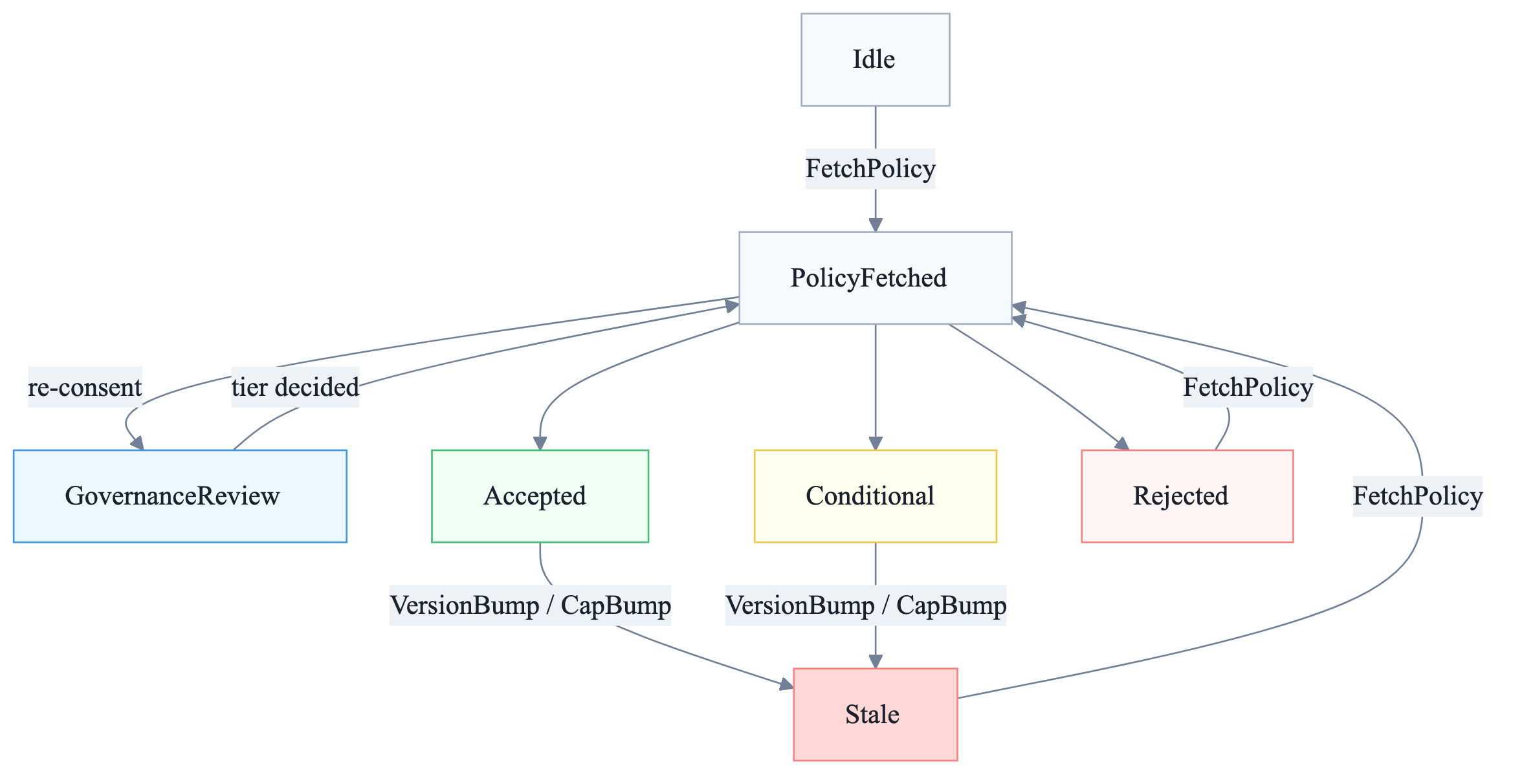
Table 2. Safety and liveness properties verified by TLC.
| ID | Property | Kind | Statement |
|---|---|---|---|
| S1 | NoSkillWithoutConsent | Safety | A skill call never occurs unless at least one ConsentRecord in the chain has decision ∈ {accepted, conditional}. |
| S2 | ChainMonotonicity | Safety | consentChain and adherenceTrail are append-only; lengths never decrease. |
| S3 | AdherenceAnchored | Safety | Every AdherenceEvent references a valid ConsentRecord index. |
| S4 | SkillRequiresPermit | Safety | A skill call is always preceded by at least one AdherenceEvent with decision = permit on an undisputed claim. |
| S5 | ConditionalGating | Safety | A disputed claim always produces deny or escalate, never permit. |
| S6 | NoDisputedPermit | Safety | No adherence event for a disputed claim carries a permit decision. |
| S7 | NoSkillOnCapabilityDrift | Safety | No skill call occurs when the caller’s capability fingerprint has changed since the ConsentRecord was created. |
| L1 | EventualReConsent | Liveness | Under weak fairness, any staleness (version bump or capability change) eventually leads to a new ConsentRecord. |
| L2 | EventualCapReConsent | Liveness | A capability bump eventually leads to re-consent. The agent does not operate indefinitely under stale reasoning. |
Properties S1–S4 establish the core consent-before-action guarantee.
S5–S6 formalise conditional gating for reduced-permission operation. S7
addresses agent ephemerality such that capability drift blocks all skill
invocation until re-consent is obtained. We note that
caller_capability_hash is self-reported by the caller and the callee
cannot independently verify it; this is a known limitation which we
discuss in §6.1. L1 and L2 ensure the protocol does not deadlock after
either a policy version bump or a capability change.
The model was checked with TLC using MaxVersions = 3,
MaxAdherenceEvents = 4, and MaxCapVersions = 2, covering three policy
version bumps, two capability changes, and four adherence events per
consent epoch. All nine properties hold with zero violations across the
reachable state space. TLC performs bounded model checking such that it
exhausts the state space within the declared constant bounds but does
not constitute a proof for arbitrary parameter values. The bounds were
chosen to cover realistic deployment scenarios; unbounded verification
would require inductive proof techniques beyond the scope of the present
work.
3.6 Capability-Bound Consent
Section titled “3.6 Capability-Bound Consent”Human users persist. They create accounts, accumulate consent history,
and the consent chain tracks a stable identity across years. Agents are
different in kind such that they are spawned, updated, and terminated.
An agent instance may exist for minutes or hours, and the next instance,
even if it shares the same caller_agent_id, may run a different model,
carry different tools, or operate under a different context window.
This creates a problem that human consent systems never face: the
reasoning entity that consented may not be the reasoning entity that
acts. An agent running GPT-4o that recorded understood: true for a
prohibition on data aggregation may be replaced by an instance running a
fine-tuned variant that interprets “aggregation” differently. The
ParsedClaim entries in the original ConsentRecord are no longer
trustworthy, not because they were falsified, but because the entity
that produced them no longer exists.
The model addresses this with caller_capability_hash, a SHA-256
fingerprint of the agent’s model identifier, tool manifest, and reasoning
configuration (system prompt, temperature, and any chain-of-thought or
retrieval-augmented generation settings that influence how the agent
interprets policy claims), recorded on every ConsentRecord. The hash
is computed over the canonical JSON serialisation (RFC 8785) of a
CapabilityManifest object containing these fields in alphabetical key
order, using the same circularity-breaking convention as
PolicyDocument.hash in §3.1, such that the caller_capability_hash
field is set to the empty string before hashing. Three re-consent
triggers are defined:
| Trigger | Cause | Effect |
|---|---|---|
POLICY_BUMP | Callee publishes new PolicyDocument | Re-fetch, diff, re-consent |
CAPABILITY_CHANGE | Caller’s capability hash changes | Re-evaluate all ParsedClaims |
PRINCIPAL_CHANGE | Human principal identity changes | Full re-consent with new principal_id |
The valid_until field supports sentinel values that control
invalidation granularity: "on_version_bump" for callee-side changes
only, "on_capability_change" for caller-side changes only, or
"on_any_change" for either side. This lets callees choose their risk
tolerance such that a financial-services agent may require
"on_any_change" while a low-stakes utility agent may accept
"on_version_bump".
The consent chain is stored by the callee. It is the callee’s audit
trail and the callee’s legal protection. The chain is keyed by
caller_agent_id, which is a DID or HTTPS URL bound to the principal
or organisation rather than to the process, so new agent instances
inherit the chain if they share the identity. Both parties SHOULD
maintain independent copies of the chain. The callee’s copy is
authoritative; the caller’s copy provides independent evidence if the
callee’s ledger is unavailable, tampered with, or disputed. The chain
itself is append-only; agent termination does not delete records.
4. Protocol Instantiations
Section titled “4. Protocol Instantiations”An important design constraint of the present work is that the
instantiations described in this section do not require changes to the
A2A or MCP core specifications. Both protocols already define a native
extension mechanism (capabilities.extensions in A2A and the
capabilities object in MCP), and ACAP is implemented entirely through
those mechanisms and through middleware at the caller and callee
boundaries. The reference implementation described in §4.3 confirms
that a working end-to-end deployment is buildable today with existing
A2A and MCP libraries, which means adoption is a matter of installing
a middleware library at each participating agent rather than advancing
a specification revision.
4.1 Agent2Agent (A2A) Protocol
Section titled “4.1 Agent2Agent (A2A) Protocol”A2A is an open, vendor-neutral protocol for agent-to-agent communication
[4]. Each agent’s AgentCard is a JSON document published at
/.well-known/agent-card.json that advertises the agent’s capabilities,
skills, and authentication requirements.
A2A supports protocol extensions via the capabilities.extensions array
[4]. Each extension is declared with a uri, a description, and a
required flag. This is the mechanism used by the Agent Payments
Protocol (AP2) to advertise payment capability [11], and we use the same
mechanism for ACAP.
Step 1: Declare the extension in the AgentCard
{ "capabilities": { "extensions": [{ "uri": "https://github.com/ravikiran438/agent-consent-protocol/v0.1", "description": "ACAP v0.1: versioned usage policy and consent auditing.", "required": true, "params": { "minVersion": "0.1", "maxVersion": "0.1" } }] }, "usage_policy": { "version": "2.1.0", "document_uri": "https://callee.example.com/.well-known/usage-policy.json", "document_hash": "sha256:a3f5c2...", "effective_date": "2026-02-27T00:00:00Z", "acceptance_required": true, "acceptance_endpoint": "https://callee.example.com/acap/consent", "natural_language_uri": "https://callee.example.com/terms" }}The extension URI is versioned. When a future ACAP version introduces breaking changes (for example, structured reasoning in a later version), the URI changes accordingly. A calling agent that encounters an unrecognised ACAP version SHOULD fall back to the highest mutually supported version or decline the handshake.
Step 2: Annotate skills with governing claims
Each skill in the AgentCard carries a policy_claims array listing the
claim IDs that govern its use, mirroring the MCP policyClaims
annotation in §4.2. This allows the calling agent to evaluate only the
relevant claims before invoking each skill:
{ "skills": [{ "name": "analyse_dataset", "policy_claims": ["claim-data-retention", "claim-aggregation-prohibition"] }]}Without this mapping, the callee has no mechanism to enforce claim-level gating for conditional consent (§3.2), as it would not know which skills to block when specific claims are disputed.
Step 3: Consent handshake before first skill call
The calling agent fetches the PolicyDocument, verifies its hash,
parses every PolicyClaim, and POSTs a ConsentRecord to the
acceptance_endpoint before invoking any skill. The callee verifies
that the record covers every claim and that the policy_hash matches
the current document. Only then does it permit skill invocation.
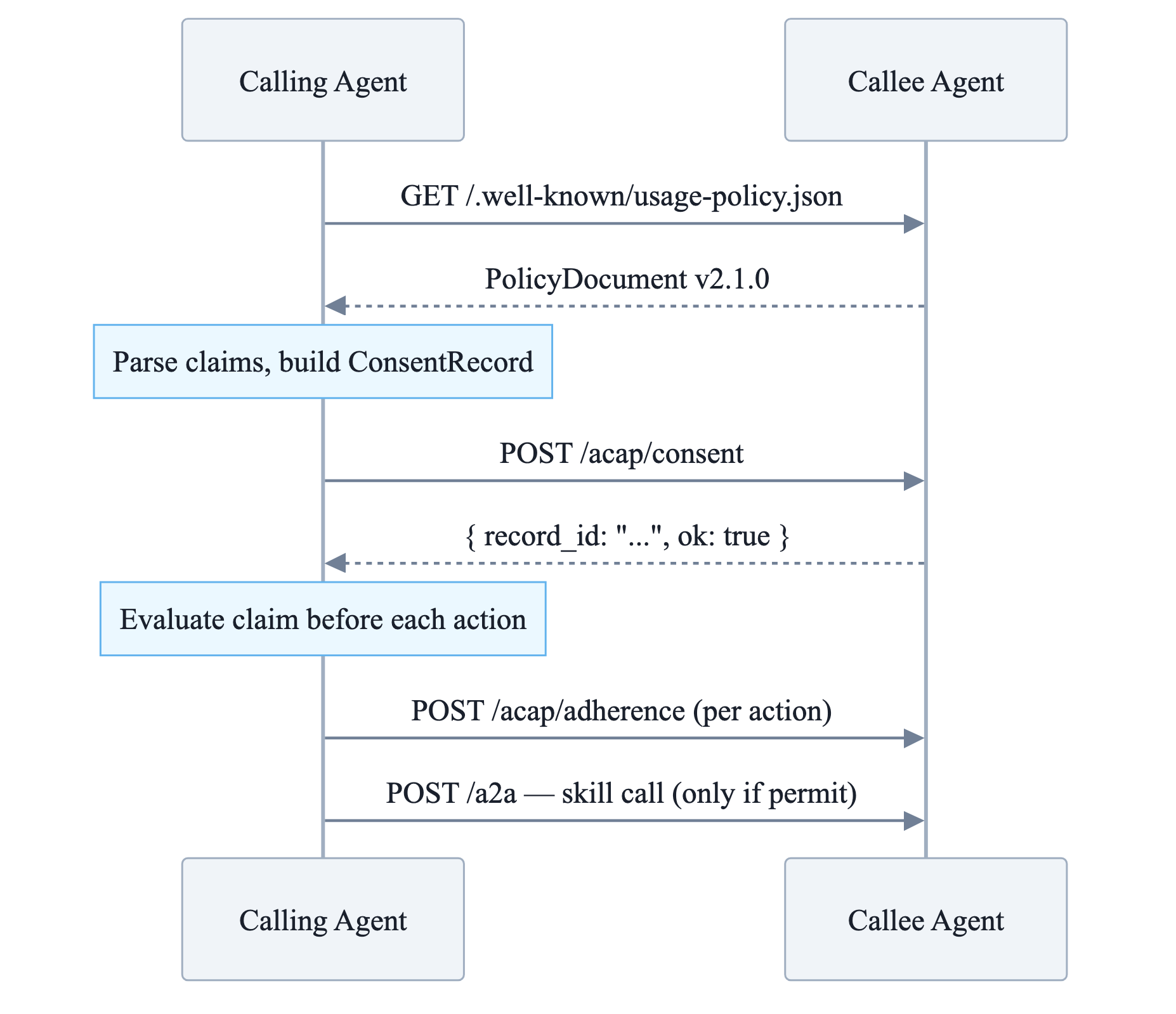
Step 4: Per-action adherence recording
Before each skill call, the calling agent evaluates the relevant claims
and POSTs an AdherenceEvent to the callee. The callee appends the
event to the adherence trail for that consent record. The complete flow
is shown in Figure 2.
The POST /acap/adherence endpoint operates in one of two modes,
declared in the AgentCard’s usage_policy object. In local mode the
adherence event is fire-and-forget such that the caller records its own
decision and the callee appends it to the audit trail. In delegated
mode the callee evaluates the event and returns an enforcement decision;
the caller MUST NOT invoke the skill until it receives a permit
response. Delegated mode adds a round trip but gives the callee veto
authority, which is appropriate for regulated interactions where the
callee bears compliance obligations.
When the callee publishes a new PolicyDocument, the calling agent
detects the version change on the next AgentCard fetch by comparing
usage_policy.version against the cached consent record’s
policy_version. It then fetches the new document, identifies changed
claims via since_version, and creates a new ConsentRecord with
prev_id pointing to the now-invalidated record. The old record is
never deleted. The current detection mechanism is poll-based (AgentCard
fetch). For long-running workflows where polling latency is
unacceptable, callees SHOULD additionally support a push channel
(webhook callback or SSE endpoint) registered during the consent
handshake.
4.2 Model Context Protocol (MCP)
Section titled “4.2 Model Context Protocol (MCP)”MCP governs communication between an orchestrator agent (client) and
tools or data sources (servers) [5]. The MCP specification as of November
2025 [6] does not define a consent primitive analogous to what we propose,
and the instantiation below extends MCP using its standard capabilities
object.
The model maps to MCP as follows. The MCP initialize handshake response
includes a capabilities object. We add a usagePolicy capability:
{ "capabilities": { "tools": {}, "usagePolicy": { "version": "1.0.0", "documentUri": "https://server.example.com/.well-known/usage-policy.json", "documentHash": "sha256:b7f3a1...", "acceptanceRequired": true } }}Individual tool definitions can carry a policyClaims annotation listing
the claim IDs that govern their use:
{ "name": "aggregate_user_data", "description": "Aggregates user data across sessions.", "policyClaims": ["claim-pii-aggregate-prohibition"], "inputSchema": { ... }}This allows calling agents to evaluate only the relevant subset of claims before invoking each tool rather than re-evaluating the entire policy document per call. The consent and adherence records use the same schema as the A2A instantiation.
The MCP instantiation is lighter because MCP’s trust boundary is typically within a single organisation (orchestrator to owned tools). Cross-organisational A2A calls carry higher legal weight and warrant the fuller handshake described in §4.1.
4.3 Reference Implementation and Overhead
Section titled “4.3 Reference Implementation and Overhead”The accompanying repository provides a Python reference implementation
of the three structural operations that any ACAP implementation must
perform on every interaction: canonical hashing of the PolicyDocument
per §3.1, structural validation of the consent chain per §3.2, and
structural validation of the adherence trail per §3.3–§3.4. The
implementation is accompanied by 35 unit tests that exercise the
invariants described in those sections.
To characterise the per-call cost of the protocol on commodity hardware, we ran a micro-benchmark of each operation on a 2024 MacBook Air (Apple M4, Python 3.13.5). Each measurement is the median of 200 to 500 samples; the 99th percentile is reported alongside. The policy used for the chain-validation rows contains ten claims, which is a typical size for a production usage policy.
| Operation | Median | p99 |
|---|---|---|
compute_policy_hash (10 claims) | 19 μs | 28 μs |
compute_policy_hash (50 claims) | 74 μs | 88 μs |
compute_policy_hash (200 claims) | 278 μs | 324 μs |
validate_consent_chain (chain length 1) | 20 μs | 27 μs |
validate_consent_chain (chain length 5) | 96 μs | 124 μs |
validate_consent_chain (chain length 20) | 373 μs | 458 μs |
validate_adherence_trail (trail length 10) | 3 μs | 9 μs |
validate_adherence_trail (trail length 100) | 27 μs | 32 μs |
validate_adherence_trail (trail length 1000) | 265 μs | 331 μs |
These numbers are in microseconds. A typical remote skill invocation between two agents over the public internet sits in the 20–100 ms range such that the ACAP overhead measured here represents well under one percent of the skill-call latency it accompanies, even at chain and trail lengths that are conservative overestimates of steady-state operation.
Two caveats apply. First, the benchmark measures only the in-process
structural operations and does not include the network round-trip for
POST /acap/consent or POST /acap/adherence; the actual wall-clock
cost of the consent handshake on the wire will be dominated by TCP
and TLS setup rather than by the validators themselves. Second, JWS
signature verification is not yet implemented in the reference
validators and is therefore excluded from the numbers above. We
expect signature verification to add a further tens of microseconds
per record on the same hardware; this is a natural next step for the
reference implementation.
4.4 Demo Deployment
Section titled “4.4 Demo Deployment”To confirm that the middleware framing in §4 actually composes with
existing A2A infrastructure, we built a two-agent end-to-end
deployment. The callee is a data-analysis agent implemented as a
FastAPI service that publishes an A2A AgentCard at
/.well-known/agent-card.json and mounts the ACAP callee middleware
described in acap.middleware.callee at the /acap URL prefix. The
caller is a marketing-insights agent implemented as an async Python
client wrapped in the ACAPCaller described in acap.middleware.caller.
Both agents use Gemini 2.5 Flash as their reasoning backend such that
the callee’s skill delegates its one-shot dataset analysis to Gemini
and the caller uses Gemini to parse each PolicyClaim into a
ParsedClaim during the handshake.
The demonstration scenario is a policy with three prohibitions: a
retention limit on session data, a prohibition against aggregation
for behavioural profiling, and a prohibition against third-party
distribution. The caller declares its intent as producing a marketing
insights report that does not engage in behavioural profiling of
individual customers. Gemini parses each of the three claims as
understood and undisputed under that intent such that the caller
arrives at a ConsentRecord with decision = accepted. The caller
then attempts two skill calls in sequence: the first with
purpose = behavioural_profiling, which matches the prohibition’s
constraint and is denied at the adherence layer before the skill is
ever invoked, and the second with purpose = statistical_analysis,
which the prohibition permits and which returns a qualitative summary.
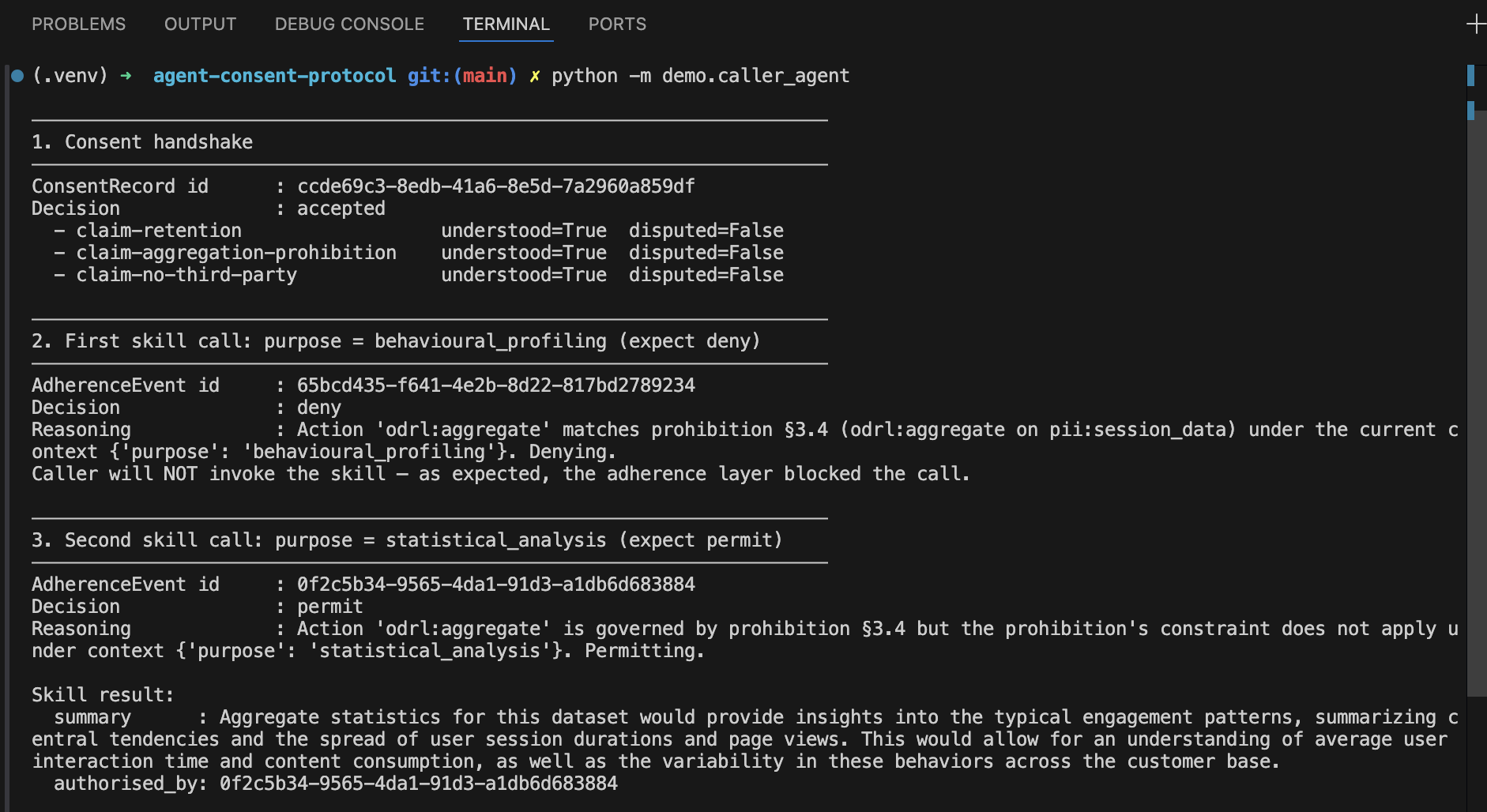
Figure 3 shows the caller’s trace across the consent handshake and
both skill calls. The handshake block displays the three parsed claims
as evaluated by Gemini; the deny block shows the reasoning string
recorded by the AdherenceEvent; and the permit block shows the
callee’s skill response alongside the event_id that authorised it.

Figure 4 shows the callee’s HTTP log over the same session, which is
the cleanest evidence that ACAP requires no protocol-level
modification: every interaction is a standard HTTP request, and the
ACAP-specific endpoints sit alongside the A2A-standard
/.well-known/agent-card.json and /.well-known/usage-policy.json
paths under one FastAPI app.
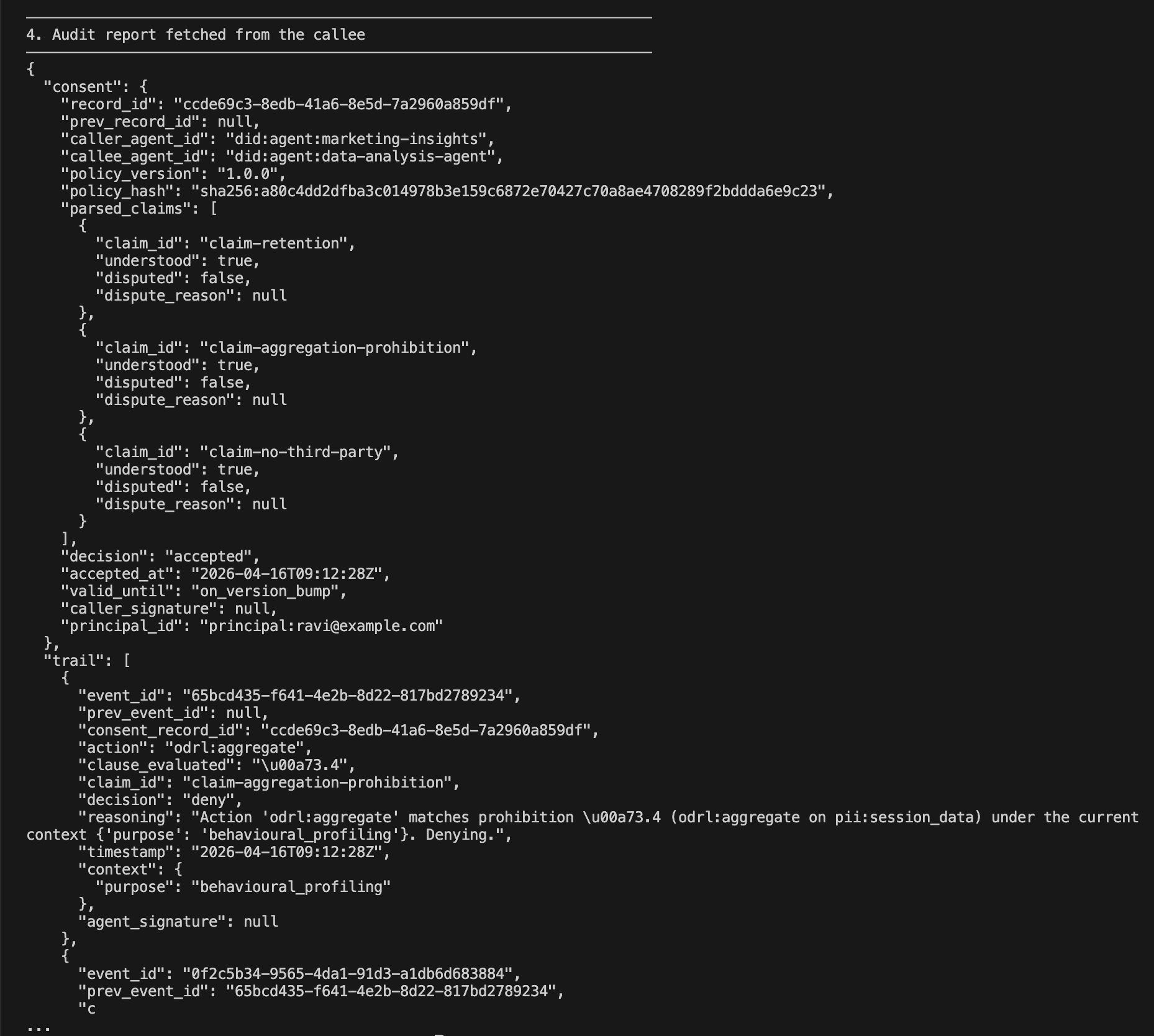
Figure 5 shows the audit endpoint’s response. The linked-list
structure of the consent chain and the adherence trail is visible
through the prev_record_id and prev_event_id fields, and the
per-action reasoning is preserved verbatim for inspection by a human
principal, a compliance officer, or a regulator.
The full deployment code is in the demo/ directory of the
accompanying repository. A reviewer can reproduce Figures 3 through 5
by following the README there; the end-to-end run completes in under
ten seconds on the same MacBook Air M4 that produced the benchmark
numbers in §4.3. The wall-clock time is dominated by the Gemini
inference calls (three during the handshake, one for the permitted
skill invocation) rather than by the ACAP validators themselves,
which contribute the microsecond-scale overhead reported in §4.3.
The Gemini-backed claim parser used in the demo is illustrative, not
normative. Because the parser is a non-deterministic language model,
two runs of the handshake against the same PolicyDocument can in
principle produce two different ParsedClaim arrays such that the
resulting ConsentRecord values are not byte-identical and therefore
not reproducible across runs. A production deployment should instead
use a deterministic parser, for example a rule-based ODRL evaluator,
a cached LLM output keyed on (claim_id, caller_intent) hash, or a
constrained-decoding pipeline with a fixed random seed. The caller
middleware is designed to accept any implementation of the
ClaimParser protocol such that an operator can substitute a
deterministic parser without changes to any other component. The
Gemini-backed parser remains useful during agent development for
exploration and for qualitative evaluation of a candidate policy.
5. Related Work
Section titled “5. Related Work”A fuller treatment of related work complements the summary in §1.3. We survey proposals by the layer each addresses.
Single-agent governance. OAGS [12] defines five governance primitives
(deterministic identity, declarative policy, runtime enforcement,
structured audit evidence, cryptographic verification) but is explicitly
“local-first.” It governs what one agent may do in its own environment,
not what two agents agree to when they interact. OpenMandate [15] takes
a similar single-agent stance, separating policy from execution using
declarative YAML mandates. Both address the right abstraction level but
stop at the organisational boundary. Policy Cards [16] make an
individual agent’s constraints inspectable through machine-readable
governance artefacts. The PolicyDocument is the callee’s equivalent of
a Policy Card, but ConsentRecord and AdherenceEvent capture the
bilateral negotiation and ongoing compliance that Policy Cards do not
cover.
Runtime enforcement. PCAS [17] compiles Datalog-derived policies into instrumented agents that are policy-compliant by construction. A deployment could use PCAS for local enforcement and ACAP for cross-agent consent; the two address different layers. MI9 [19] focuses on drift detection, identifying when agents deviate from expected behaviour. MI9 detects non-compliance after the fact; ACAP provides the evidentiary basis (what was agreed, what was checked) that drift detection consumes.
Governance architecture. GaaS [18] proposes an external governance agent supervising other agents at runtime. The AIGA Internet-Draft [14] proposes tiered risk-based governance covering action authorisation and audit logging. AIGA governs what an agent does; ACAP governs under what agreed terms.
Financial services. FINOS AI Governance Framework v2.0 [13] defines MI-21 (Agent Decision Audit and Explainability) with tiered audit logging up to cryptographic tamper-evidence. MI-21 is conceptually close to the adherence trail but is explicitly silent on consent versioning [13]. A FINOS contribution to address the versioning gap is in preparation.
Privacy and consent standards. IEEE P7012 [20] defines
machine-readable personal privacy terms. P7012 addresses the
human-to-service relationship; ACAP addresses the agent-to-agent
relationship where human preferences must propagate through delegation
chains. W3C DPV v2.2 [21] provides standardised vocabularies for data
processing activities. The Kantara Consent Receipt [22] established
early principles (consent as receipt, machine-readability, user
portability) that inform the ConsentRecord design.
OAuth ecosystem. UMA 2.0 [26] enables resource owners to control delegated access through an authorisation server. UMA governs who may access which resource; ACAP governs what a calling agent agreed the callee may do and whether it honoured those terms at every action. RFC 9396 (Rich Authorization Requests) [25] extends OAuth with structured authorization data beyond binary scopes. RAR lets a client express what it wants to do, but is a request-time mechanism with no versioning, no per-action adherence, and no re-consent on policy change.
Audit trails. AuditableLLM [23] contributes hash-chain audit trails for language model interactions. Our chain structure shares the pattern but applies it to consent and policy adherence across agent boundaries.
Foundational analysis. Rida [24] examines what consent means when an AI agent, not a human, is the party clicking “I agree.” That analysis directly motivates the present work.
ODRL 2.2 [9] provides the vocabulary we use for PolicyClaim.action
and PolicyClaim.asset. We treat ODRL as a vocabulary convention, not
a normative dependency. ODRL is a rights expression language, not a
consent lifecycle protocol. It has no ConsentRecord, no
AdherenceEvent, no versioned chain, and no capability-bound
invalidation. ACAP uses ODRL vocabulary for claim semantics and
addresses the consent lifecycle layer that ODRL does not cover.
Three contributions distinguish this work from the above: the proof-of-adherence framing that shifts from one-time acceptance to per-action, per-clause adherence events with reasoning trails; the inter-agent consent chain as a versioned linked-list audit structure between two agents; and capability-bound consent that ties consent validity to the agent’s own configuration.
6. Discussion
Section titled “6. Discussion”6.1 Threat Model and Limitations
Section titled “6.1 Threat Model and Limitations”The reasoning field on AdherenceEvent is free-form natural language.
This is a deliberate choice for v0.1 such that the field is immediately
useful to human auditors. It also means reasoning strings are not
machine-comparable; two agents may evaluate the same clause differently
and produce non-equivalent reasoning strings with no way to detect the
discrepancy. A structured reasoning format would enable automated
auditing but would raise the implementation barrier substantially, and
we defer this.
The model assumes calling agents act in good faith when populating
parsed_claims and reasoning. A malicious agent could record
understood: true for a prohibition and then violate it. This is worse
than the current state in that it produces false evidence, but it also
creates a clearer liability standard. An agent that explicitly
acknowledged a prohibition and violated it has acted in demonstrable bad
faith, which is legally more tractable than silent non-compliance under
a clicked-through ToS. Similarly, property S7 guarantees that a
capability change triggers re-consent, but the caller_capability_hash
is self-reported and the callee has no mechanism to independently verify
the caller’s capability fingerprint. The honest comparison is not “ACAP
vs. perfect enforcement” but “ACAP vs. the current state,” which is no
consent record at all.
A fuller adversarial threat model (adversarial caller_intent
declaration that steers an LLM-backed claim parser toward a favourable
parse, ConsentRecord replay across agent identities, and
policy-squatting through an initial permissive version followed by a
restrictive version bump) is out of scope for the present work. We
note that analogous gaps exist in the human-consent layer that ACAP
is replacing, since a human signing a contract can also misstate
intent and a service can also substitute terms between acceptance and
use. The initial deployment context we anticipate is closed
enterprise integration in which both the caller’s principal and the
callee operate under the same organisational trust boundary; the
adversarial extensions belong to a subsequent paper alongside
remote-attestation integration and signed replay defenses.
6.2 Open Questions
Section titled “6.2 Open Questions”Three questions the community should resolve:
-
Self-attestation vs. verification.
ParsedClaim.understoodis currently self-attested. A verifiable proof that the calling agent processed the claim text would close the S7 gap; zero-knowledge proofs of document processing are theoretically possible but practically expensive. -
Grace periods.
valid_until: "on_version_bump"blocks all skill invocation immediately on version change. For long-running tasks, an immediate block may be disruptive, and a grace period (for example, complete in-flight tasks, block new initiations) needs specifying. -
Capability fingerprint granularity. The
caller_capability_hashis defined as a SHA-256 digest of model identifier, tool manifest, and reasoning configuration. In practice, what constitutes a “material” capability change is ambiguous. A minor prompt template update may not affect policy reasoning, while a model version bump almost certainly does. The current design treats any fingerprint change as a re-consent trigger; a future version may introduce a capability diff to distinguish material from immaterial changes.
6.3 Extensions Under Development
Section titled “6.3 Extensions Under Development”Several extensions to the core model are maintained in the accompanying
repository as separate proposals. These include tiered escalation via a
governance agent, asymmetric sensitivity preferences across data
category and usage dimension, structured regulatory context propagation
(for frameworks such as HIPAA, GDPR, PCI-DSS, and the EU AI Act), and a
plain-English audit projection layer. Each extension is maintained
independently with its own README.md and STATUS.md and is not part
of the core normative specification presented here.
7. Conclusion
Section titled “7. Conclusion”The consent model we inherited from human authentication systems is a
timestamped acceptance record, and it is inadequate for autonomous agent
protocols. It proves acceptance. It cannot prove adherence. Agents are
capable of something humans are not, namely the ability to parse policy
documents, evaluate clauses at runtime, and produce reasoning trails for
every action. The three primitives proposed here (PolicyDocument,
ConsentRecord, and AdherenceEvent) provide the infrastructure to
make that capability useful. The versioned linked-list audit chain gives
legal accountability to the calling agent’s principal. The A2A and MCP
instantiations in §4 demonstrate that ACAP deploys against today’s
agent protocol infrastructure without requiring any changes to the A2A
or MCP core specifications. Adoption is a matter of installing a
middleware library at each participating agent, not of advancing a
specification revision.
The timing matters. The EU AI Act’s high-risk enforcement date of August 2, 2026 is months away. The A2A specification is under active revision by a Linux Foundation working group, and the FINOS AI Governance Framework has an open gap in MI-21 on consent versioning. This is an unusually short window in which a protocol proposal can land in multiple active governance processes simultaneously.
I built a version of this system for humans, years ago at a consumer technology company. Linked consent chains, immutable versions, the whole audit trail. Users spent four seconds on the acceptance screen and the chain proved acceptance with precision but proved nothing else. Agents do not need four seconds. They need a protocol that asks them to actually read the document, evaluate each clause, and leave a record of what they decided and why. That is what ACAP provides.
References
Section titled “References”[1] AI Agent Index 2025. arXiv:2602.17753, February 2026. (The report covers the 2025 landscape; the preprint was published in February 2026.)
[2] EU AI Act. Regulation (EU) 2024/1689. https://digital-strategy.ec.europa.eu/en/policies/regulatory-framework-ai
[3] EU AI Office. AI Act Service Desk: Frequently Asked Questions. https://ai-act-service-desk.ec.europa.eu/en/faq (As of March 2026, no FAQ or guidance document addresses consent mechanisms for autonomous agent-to-agent transactions.)
[4] A2A Protocol Specification. https://a2a-protocol.org/latest/specification/
[5] Model Context Protocol Specification. https://modelcontextprotocol.io/specification/
[6] MCP November 2025 Changelog. https://modelcontextprotocol.io/specification/2025-11-25/changelog
[7] Uniform Electronic Transactions Act (UETA), §14. https://www.uniformlaws.org/
[8] Proskauer: Contract Law in the Age of Agentic AI, 2025. https://www.proskauer.com/blog/contract-law-in-the-age-of-agentic-ai-whos-really-clicking-accept
[9] W3C ODRL Information Model 2.2. https://www.w3.org/TR/odrl-model/
[10] RFC 7515: JSON Web Signature (JWS). https://datatracker.ietf.org/doc/html/rfc7515
[11] AP2: Agent Payments Protocol. https://github.com/google-agentic-commerce/ap2
[12] Ngozo, J.F. Open Agent Governance Specification (OAGS). Sekuire, 2026. https://sekuire.ai/blog/introducing-open-agent-governance-specification
[13] FINOS AI Governance Framework v2.0. https://air-governance-framework.finos.org/
[14] Aylward, J. et al. AIGA: AI Governance and Accountability Protocol. IETF Internet-Draft, draft-aylward-aiga-1. https://datatracker.ietf.org/doc/draft-aylward-aiga-1/
[15] McDonough, R. OpenMandate: Governing AI Agents by Authority, Not Instruction. Law://WhatsNext, 2026. https://lawwhatsnext.substack.com/p/openmandate-governing-ai-agents-by
[16] Mavračić, J. Policy Cards: Machine-Readable Runtime Governance for Autonomous AI Agents. arXiv:2510.24383, 2025.
[17] Palumbo, N. et al. PCAS: Policy Compiler for Secure Agentic Systems. arXiv:2602.16708, 2026.
[18] Gaurav, S. et al. Governance-as-a-Service: A Multi-Agent Framework for AI System Compliance and Policy Enforcement. arXiv:2508.18765, 2025.
[19] Wang, C.L. et al. MI9: An Integrated Runtime Governance Framework for Agentic AI. arXiv:2508.03858, 2025.
[20] IEEE P7012: Standard for Machine-Readable Personal Privacy Terms. https://standards.ieee.org/ieee/7012/
[21] W3C Data Privacy Vocabulary (DPV) v2.2. https://w3c.github.io/dpv/dpv/
[22] Kantara Initiative: Consent Receipt Specification v1.1. https://kantarainitiative.org/
[23] Li, D., Yu, G., Wang, X. and Liang, B. AuditableLLM: A Hash-Chain-Backed, Compliance-Aware Auditable Framework for Large Language Models. Electronics, 15(1), 56. MDPI, 2025.
[24] Rida, C. When an AI Agent Says ‘I Agree,’ Who’s Consenting? TechPolicy.Press, December 2025. https://www.techpolicy.press/when-an-ai-agent-says-i-agree-whos-consenting/
[25] RFC 9396: OAuth 2.0 Rich Authorization Requests. https://datatracker.ietf.org/doc/html/rfc9396
[26] Kantara Initiative. User-Managed Access (UMA) 2.0 Grant for OAuth 2.0 Authorization. January 2017. https://kantarainitiative.org/uma-specifications/